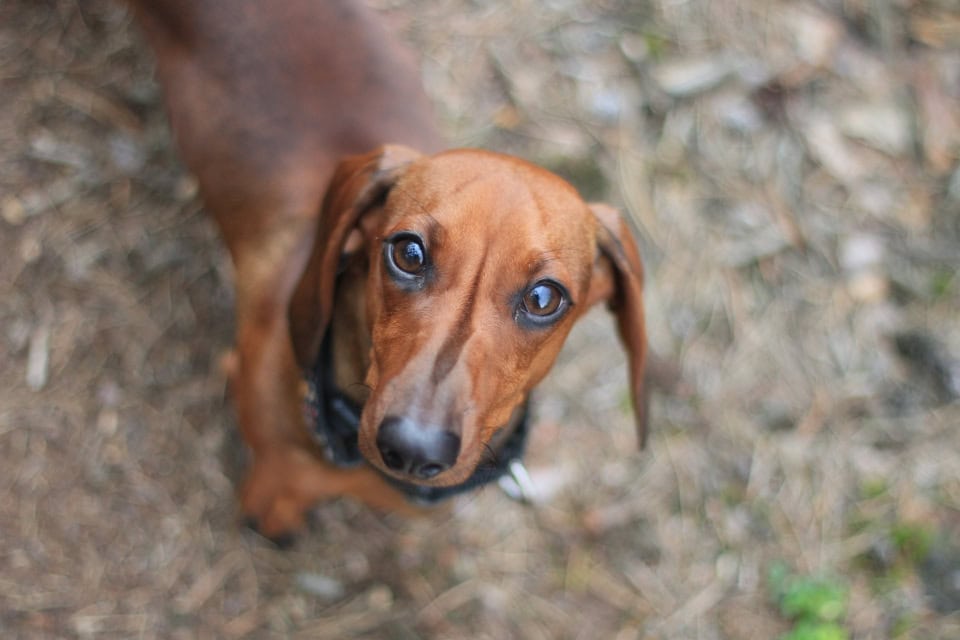
A head tilt is a relatively common neurological sign in dogs with vestibular disease.
Before going too far, it is important to note that a head tilt is distinct from a head turn.
Head tilt versus head turn: what’s the difference?
These two terms describe different head positions.
Head tilt
When viewed from the front, one ear sits lower than the other, making the dog’s head appear tilted toward one shoulder.
Head turn
The dog’s nose points to the left or right while the head remains relatively level, with the ears at a similar height.
A head tilt commonly indicates a problem affecting the vestibular system, which helps control balance. A head turn can be associated with problems affecting the forebrain, although the full neurological examination is needed to interpret either sign.
What is vestibular disease?
The vestibular system helps dogs maintain balance and coordinate their head movements with their eyes and body posture. It can be divided into:
- the peripheral vestibular system, which includes the balance-sensing structures of the inner ear and the vestibular branch of the eighth cranial nerve
- the central vestibular system, which includes the vestibular nuclei in the brainstem and their connections with the cerebellum and other parts of the brain
Vestibular disease is an umbrella term for conditions affecting this system, rather than a single diagnosis.
Dogs with vestibular dysfunction may show several characteristic signs:
- Head tilt: one ear is held lower than the other.
- Vestibular ataxia: an unsteady, wobbly or drunken-looking walk, often with leaning or falling to one side.
- Nystagmus: involuntary, rhythmic movement of the eyes.
Not every dog will show all these signs.
What causes vestibular disease?
These are some common underlying causes which affect the vestibular system.
Peripheral vestibular disease
This involves structures outside the brain, particularly the inner ear and vestibular nerve. Common causes include:
- Middle or inner ear infections: infection can affect the structures responsible for balance, sometimes even when obvious external ear problems are absent.
- Idiopathic vestibular syndrome: sometimes called geriatric or old dog vestibular syndrome, this typically causes a sudden onset of balance problems, particularly in older dogs. No specific underlying cause is identified, and many dogs begin improving within days and recover over several weeks.
- Less common causes: trauma, certain medications, tumors affecting the ear or vestibular nerve, and occasionally hypothyroidism.
Idiopathic vestibular syndrome is a diagnosis of exclusion. A sudden head tilt in an older dog should not automatically be assumed to be a harmless age-related condition.
Central vestibular disease
This occurs when the affected structures are within the brain, particularly the brainstem or cerebellum. Possible causes include inflammatory or infectious disease, brain tumors, strokes and certain toxic or metabolic disorders.
Distinguishing peripheral from central vestibular disease is an important part of the neurological examination. Changes in alertness, weakness, abnormal paw placement, involvement of other cranial nerves and particular patterns of eye movement may help the veterinarian determine where the problem is located. Additional investigations may be needed to identify the cause.
When should I see a vet?
A new head tilt should be assessed by a veterinarian promptly, ideally on the same day, especially when it develops suddenly or occurs alongside other neurological signs.
When to seek emergency care
Seek emergency veterinary care if your dog:
- cannot stand or walk
- has repeated vomiting or cannot keep water down
- becomes unusually drowsy or unresponsive
- develops seizures
- deteriorates rapidly
Your veterinarian will assess your dog’s balance, eye movements, coordination, reflexes and ear health. Depending on the findings, they may recommend blood tests, further ear investigations, referral to a veterinary neurologist, or advanced imaging such as MRI or CT to investigate possible disease within the brain or ear.
The important first step is to determine where the problem is located and then investigate why it has occurred. This distinction helps guide appropriate treatment and identify dogs that need more extensive investigation.
This article is for education only and doesn’t replace advice from your veterinarian.
Related guides
Vestibular disease and balance problems
Signs, causes, diagnosis and treatment.
Neurological conditions
Common problems and when to get help.
For pet owners
How your vet can get Dr. Dillon’s input.
Cluster seizures in dogs
What they are and when they are an emergency.